
Together

After I wrote Shining Cuckoos, Grey Warblers: trust and infinity I started to ask myself a risky question: am I like the cuckoo? Risky, because it feels much safer to align with the heroic, stoic and prettily-singing grey warbler. And yet. Acknowledgement of need? If there’s something the cuckoo doesn’t question, its dependence.
I’ve been reading Inciting Joy by Ross Gay. This book has sent me back into the garden. There solace, beauty and tangled mess there, in all of it co-existing. Here is what Ross Gay has to say about in dependence:
“... no matter how much you earn or stash or hoard or bunker up, no matter even your fleet of spaceships, you will never be self-sufficient or independent. Because nothing living is … In fact, in addition to the fact that we all die, the most salient or unifying feature of we the living is that we cannot survive without help.”
~ Ross Gay from Inciting Joy.
I depend on the on-going exchange of writing and reading. This is survival for me. Nourishment and navigation through the ocean-land-sky of life.
I started to write a process journal for the last post. It was like a cake without baking powder, and maybe without play. Instead, I wondered: what if I asked some of the writers I depend on, whose work sustains me, to share work which relates to all of this: connection, in dependence, togetherness?
So here is some of the work which has nourished me, shared with permission.
On Finding a Poem
~ by Sandie Forsyth
Take the poem offered
into your gaze.

Take the poem,
not as in, just take it, meaning
to swallow it whole
and foreign to yourself, rather,
let it find you.

Take the poem
and make something of it
which is yours.

Take it
as a kind gesture, or
for safekeeping,
as if it were a treasure.

Take the poem
as a small offering,
as at an ending,
in appreciation
when something
or someone has gone,
leaving in its place,
something hard to bear.

Take the poem
expecting the ground you are standing on
to shift,
expecting to never return
to where you are now.

Take the poem
as the poem takes you.

~ from Sandie Forsyth's forthcoming collection Visitor.
*
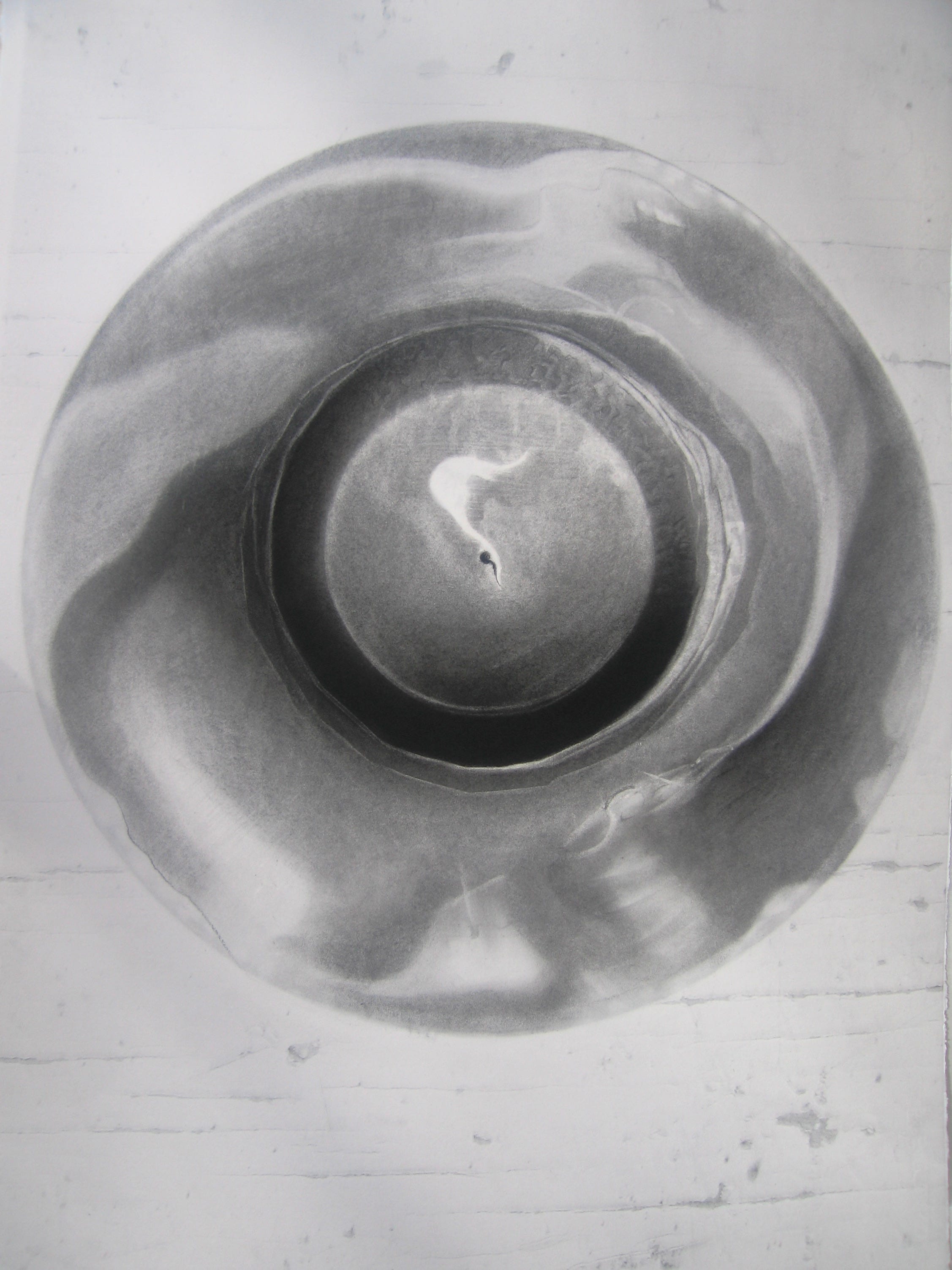
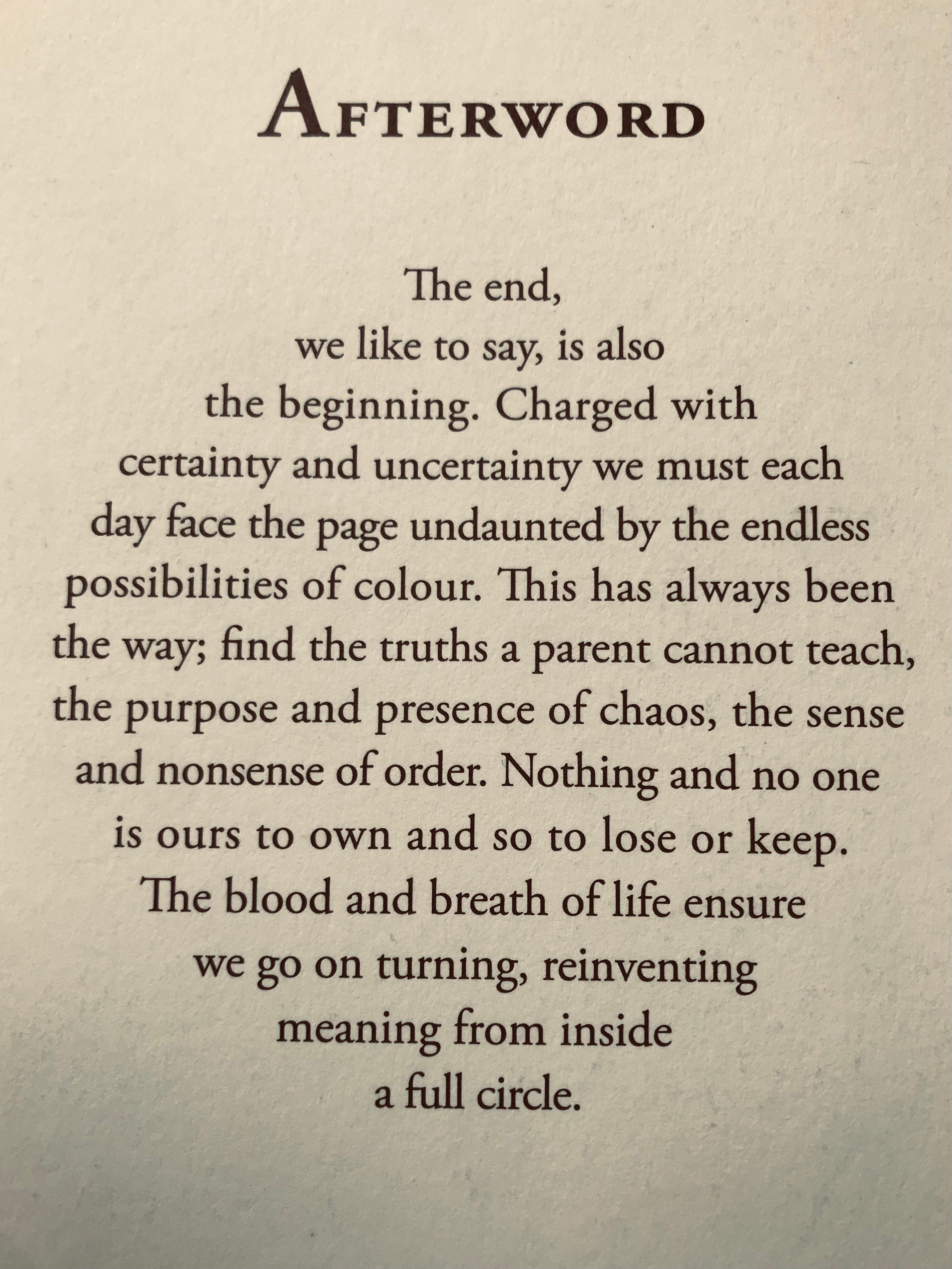
Claire Beynon’s work illuminates for me the finite within the infinite.
Afterword
*
Carolyn McCurdie writes so beautifully in Midwinter Carnival about engagement with the dark, finding connection, play, and within this: wonder. This poem is doubly special to me as a friend of mine helped to create the event the poem walks through. So the creative work ripples out and out, and returns and returns.
Midwinter Carnival
by Carolyn McCurdie
The city has barred these roads against cars
and switched off its lights.
Deep dark is the intent.

So we come, wearing scarves and thick socks, trailing
our children into this quiet where chatter is gentled
to murmur like underground water.

We mill round the gates till a haka on the church steps
opens the night to us, gifts to us a challenge to our disbelief
as star-bursts of colour transform, re-wonder this building,

costume her in shifting light; her gothic arches
and buttresses strike poses, perform magic,
conjure castles that poof! disappear.

We are the guests of giant ethereal whales, unicorns,
flamingos that masquerade as lanterns and shed soft light
over the grass and trees. As if ancient star-maps drawn on the sky

took solid form and muted their fire to play
on this planet. We’re lit by the pale glow of the wolf.
She’s solitary but every line of her body reaches,
calls to her sky-dwelling young: Come together!

It’s the crowd that responds. In slow rotations we merge,
the pitch black of us, catching sparks that light
a smile here, and there a child’s finger raised high in delight.

In the dark, I’m nameless, shapeless, my bulk the crowd’s bulk,
my tenderness, courtesies are yours and yours mine,
an expansive way of being alive
that schools of fish know, wolf packs, wheeling birds.

What witching’s abroad, that we forget deep connection?
Tonight, that spell breaks.
At this moment of pivot, of turning again to the sun,
we come close. Wolf knowing. And ours,
in the quiet underground of us and where we are children.
~ from new work by Carolyn McCurdie. She is the author of Bones in the Octagon. Mākaro Press, 2015.
*
Steve Smart shared two poems with me, which speak into the landscape of loss and connection. I especially love that Steve has written about krill as part of this. These small creatures are so utterly essential to the life of the ocean. I often see krill when I’m in the water, and too I see fat seagulls bobbing with full bellies. At these times I feel a kind of joy: the ocean is alive, and I am alive.
Out of touch
by Steve Smart
Your temporary absence
reminds me of others.

I hold it in the
muscles of my arms,

Upper and fore, and
across my chest.

My hands shape
a lack of you.

Of my other absences,
some are final.

Still others, simply
fallen out of touch.

Out of contact. So,
I dream them well.

In holding your absence,
I weigh the rest.
We are Krill
in memoriam Andy Brierley
by Steve Smart
I am the meal that’s in-between,
a format suiting one and all,
for seals and squid and penguins,
converting the smallest of the sea,
for fish and shrimps and people, the
unseen convenience food that’s me.

No legends sung about us krills,
shape shifters of seven seas,
they ping us under pressure,
exoskeletons creaking we dive, dive, dive,
cosy swarm lights rising fallen,
gills bless this brine to wines of life.
.
More of us aswim than any other
swelling life in each ocean alive,
and not much here without us,
no great whales baleen or blue,
without some fish-free small fry,
brother, without us – me and you.
A note from Steve Smart about Andy who this poem is dedicated to:
“Professor Andrew (Andy) Stuart Brierley of the University of St Andrews died aged 56 in 2024. He was a very active and enthusiastic scientific researcher and educator. This poem was written after joking with Andy about a conference on krill that he was going to host in St Andrews in 2017. In due course the conference led to the foundation of an international krill research group. Andy’s contribution to his research community is recognised and commemorated on the south coast of Coronation Island in the Antarctic South Orkney Islands, where the British Antarctic Survey named Brierley Bay in his memory. Speaking shortly after Andy passed away his partner reached out with her own touching tribute - “When you feel able please do what Andy did best: go out there and make magnificent memories.””
https://www.marine.science/2024/03/05/professor-andrew-brierley/
https://news.st-andrews.ac.uk/archive/antarctic-bay-named-after-professor-andrew-brierley/
*
Matt Licata is a writer and therapist who’s book A Healing Space: befriending ourselves in difficult times will remain, on my top ten list of — most important books I’ve read in my life. Matt Licata has generously agreed to share the reflection below.
A Reflection on Fragility and Gratitude
by Matt Licata
On this new day, we can so easily take for granted that tomorrow will come — that another sunrise will be given, that we’ll get another moment with someone we love, that the leaves or the snow will fall again in just this way.
But another part of us knows how fragile this life is, how quickly it moves, how precious and shattering it can be — and that one day, the opportunity to turn toward it will be gone.
May we not postpone our time here.
May we not forget.
May we remember what’s most important, what truly matters.
May we use our words with kindness, help where we can, listen to others in a way that lets them feel felt.
May we hold one another when a lamp is needed in the dark.
At the end of this life, it’s unlikely we’ll be thinking about whether we accomplished everything on our lists or manifested all the things we thought we wanted.
More likely, there will be just one question:
How well did I love?
Did I pause to behold the beauty of this place?
Was I willing to feel more, to risk more, to let life truly matter?
Did I let myself participate in the miracle and the ache of being here?
The birdsong, the sky, a single moment of deep contact with another human being…
The wild, undomesticated chaos and glory of this whole experience.
May we end the trance of postponement, the dream that some future moment will bring the love we long for.
Love is now.
And the harvest of this moment — the simple, ordinary, luminous “enoughness” of life — is here for us when we turn toward it.by Matt Licata
Thank you so much Matt Licata for permission to share this beautiful work.
*
I will leave you with At Dusk from Sandie Forsyth’s forthcoming collection Visitor. Sandie’s poem speaks to me of how we travel together for these important essential moments. The finite within the infinite. Writing, reading. The ancient exchange.
At Dusk
by Sandie Forsyth
Suddenly there,
flying down the main street
at dusk,
level with my car,
seabird,
both of us close and
travelling in the same direction
for a few seconds,
one world
overlaying another,
with the streetlights
and recent rain
shining softly on creamy belly
and graceful wings
in steady flight
on a sure path,
and I notice
how still I am,
and soft,
as I drive quietly home
long after the bird has left me.
~ from Sandie Forsyth’s forthcoming collection Visitor. Dromedary Collective Press, 2026.
Note from Kirstie
I’ve turned off paid subscriptions for November/December 2025. Paid subscriptions, and Process Journal will resume in January 2026. This is so I can take a break, and also because this time of year is generally hectic, and I’m not sure if I’ll be able to write much in the coming weeks.
Thank you for being here.
Kirstie
Thank you Kirstie
You have added another dimension to our experiences
Enjoy your Christmas and New Year
Thank you Kirstie for always being brave enough to ask the risky questions and then to stay with them. I love what you've gathered here to ponder the matter of interdependence, connection. A collaborative answer. Just perfect, and really moving, the whole always being more than the sum of the parts. Have a well-deserved break. Love to you and to everyone else on board here.